



 The Magic Touch


 Swiss Performance Chemicals


Fire, fumes, and a defeated interlock.
Written to be printed and pinned above the machine. This is general guidance from a supplier, not a substitute for your institution's risk assessment or for your machine's own manual — read those too, and follow them where they differ.
Fire, fumes, and an interlock somebody defeated. None of them are exotic. All of them are prevented by habit rather than by equipment.
Fire
A laser cuts by burning. A small flame at the cut line is normal and self-extinguishing. A flame that keeps burning after the head moves on is not.
- Never leave a running machine unattended. Not for a phone call, not for a fire drill, not for the last five minutes of a long job. This is the rule that matters most and the one most often broken.
- Keep the bed clear. Offcuts lying under the honeycomb are the most common fuel source in a school lab. Clean it out at the end of every session.
- Know where the stop is before you need it — the lid, the emergency stop, the extraction. Everyone who uses the machine should be able to reach all three without thinking.
- Keep a CO₂ extinguisher within reach and check it is in date. Do not use water on an electrical machine.
- Thin, dry and dusty materials burn fastest. Paper, card, thin ply and felt need closer attention than acrylic.
- Do not walk away from a first run of an unfamiliar material. If you have not cut it before, watch the whole job.
Fumes
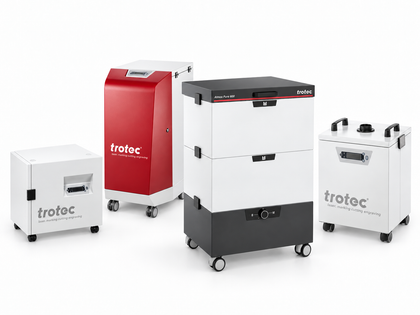
Everything a laser cuts becomes airborne. Extraction is not a comfort feature — it is the control that protects the people in the room.
- Check the extraction is pulling before every session. Paper strip at the bed, lid open, extractor running. If it does not move, do not cut.
- Track filter life. A saturated filter stops protecting long before anyone notices a smell, and smell is a poor indicator either way.
- Do not run with the lid open. Beyond the beam risk, it defeats the airflow the extraction depends on.
- Ventilate the room as well. Extraction handles the machine; room ventilation handles what escapes it.
PVC and vinyl. Release hydrogen chloride gas under a laser. It corrodes the machine from the inside and it harms whoever is breathing it. This is the single most important material rule there is.
Polycarbonate (often sold as Lexan) — burns, discolours and cuts badly. ABS — melts and releases cyanide compounds. Fibreglass and carbon fibre — the resin and the fibres are both a problem. Anything with a chrome, mirror or unknown coating. Anything at all you cannot identify.
The difficulty is that none of these announce themselves. Vinyl banner offcuts, some faux leather, many folder and binder covers and a great deal of cheap plastic sheet are PVC. Material donated by a parent or salvaged from a workshop is the usual route into a school lab. Teach students to ask rather than assume, and keep an approved-materials list on the wall.
The beam
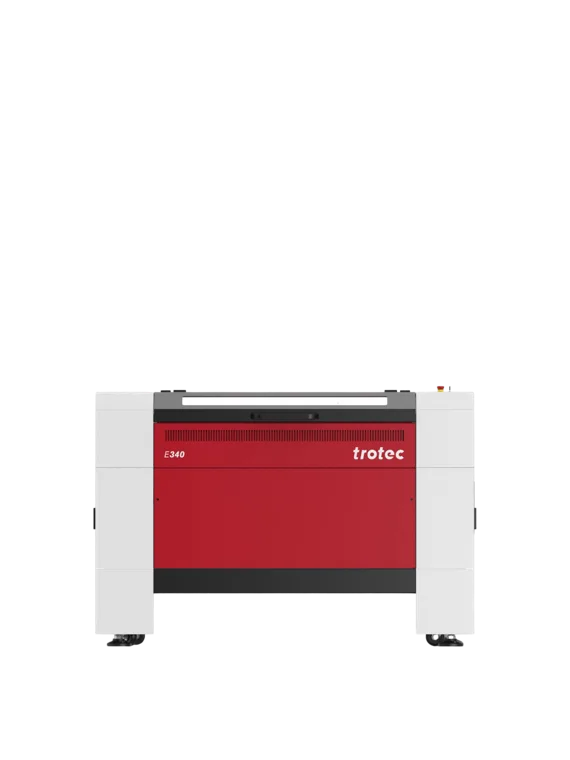
An enclosed machine with working interlocks contains its beam and behaves as a low-hazard device in normal use. That protection depends entirely on the interlocks working.
- Never defeat an interlock. Not with tape, not with a magnet, not "just for this one job". If a machine runs with the lid open, it is out of service until it is fixed.
- Do not modify the enclosure or remove panels to fit an oversized workpiece.
- Do not stare into the cut for long periods even through the viewing window. Bright process light is not the beam, but it is not good for eyes either.
- Open machines and fibre systems are a different category with different eyewear and control requirements. If you are considering one, talk to us about the room before the machine.
- Only trained service people open the machine. Panels off means the interlocks are bypassed.
Running a teaching room
-
Induction before access, every year.
Short and mandatory. Extraction check, the refusal list, what to do if there is a flame, where the stop is. Nobody operates the machine without it — including staff.
-
Named supervision.
An adult who is responsible for the machine while it runs. Not "someone in the room".
-
An approved materials list on the wall.
What is allowed, what is banned. If it is not on the list, it does not go on the bed until someone checks.
-
A weekly maintenance slot in the timetable.
Lens and mirrors, bed cleared, filter checked, extraction tested. Thirty minutes. It is the cheapest insurance on a capital asset you will ever buy.
-
A written procedure for a fire.
Lid closed, job stopped, extraction off, extinguisher, evacuate. Rehearsed, not filed.
Before you specify a room
Extraction routing, power, and where the machine sits relative to occupied desks are easier to get right before installation than after. Send us the room and we will tell you what it needs — that conversation is free and it has saved more than one institution a rebuild.
For the material side in depth, the materials training half day covers identification and safe stock buying. For the teaching side, the teacher's hub covers supervision and class management.