




 The Magic Touch


 Swiss Performance Chemicals

What a student does with this after they graduate.
The employment argument, with the sectors that actually hire for it here — and an honest note on what the machine will not do on its own.
Operating a laser cutter is not a career. What surrounds it is.
This page is for the conversation with a parent, a dean or a funding committee who wants to know what a student does with this after they graduate. The honest answer is that the machine is the visible part of a much more employable skill set: reading a drawing, preparing a file to manufacture, choosing a material for a reason, and costing a batch.
What the student is actually learning
- CAD and vector file literacy. Transfers directly to CNC, waterjet, plotting, printing and every other digital manufacturing process. The machine changes; the file does not.
- Design for manufacture. Drawing something that can be made, at a price, in the material available. This is the gap most design graduates arrive with.
- Tolerance and fit. Kerf, clearance, assembly. Learned physically, retained permanently.
- Material knowledge. What a substrate does under heat, load and finishing.
- Batch and cost thinking. Nesting, waste, time per unit. The difference between a maker and a manufacturer.
- Machine responsibility. Maintenance, extraction, safety, supervision. Employers notice this before they notice the portfolio.
Where it leads in the Kingdom
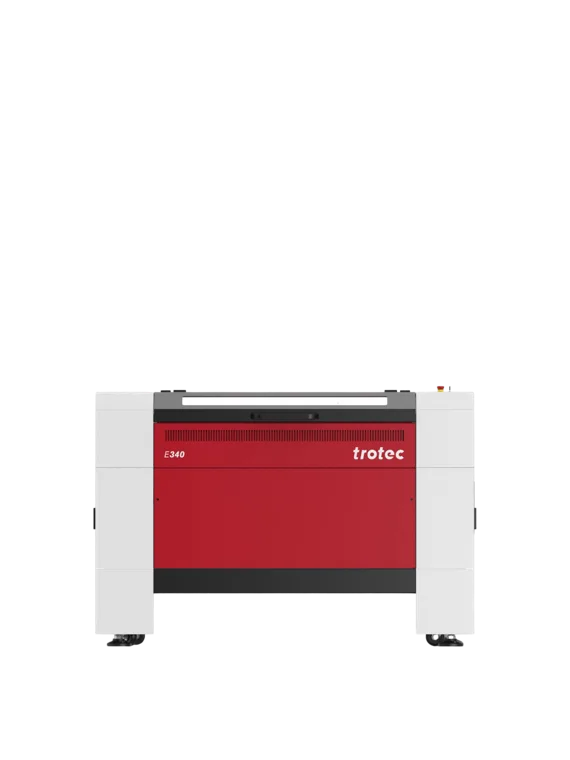
Saudi Arabia is localising manufacturing, and the growth is in the small end — fabrication shops, signage, packaging, events, giveaways and light industrial marking. These are businesses that buy exactly this equipment, and they hire people who already know it.
What to tell a student honestly
The machine will not get them a job on its own. A portfolio of finished, photographed, well-made objects with the reasoning behind them will. Push students to document what they made and why — the file, the failures, the settings, the cost per unit. That document is the employable artefact.
And the equipment they train on matters less than it appears. Someone who understands kerf, extraction, nesting and file preparation will pick up an unfamiliar machine in a week. Someone who only memorised one interface will not.
For the department
If you are making the case internally, the strongest evidence is local: the businesses in your own city that run this equipment and hire from it. We sell to a good number of them and we are happy to talk about what those employers are actually short of.
To let students see it first, our campus tournament puts the machines in front of them for a day — first visit free.
Related.
We bring the machines and run a design tournament. First visit free.
Curriculum guideWhere the machine lands in a programme, and what you can assess.
Beyond shop classThe departments outside design that want one too.
FundraisingRoutes that get a lab funded when the case is already made.