




 The Magic Touch


 Swiss Performance Chemicals


Where the machine lands in a programme.
Seven disciplines, what a student can actually be assessed on, and the lesson-time arithmetic that decides whether the lab gets used or covered up. Written for the conversation with a head of department.
A laser cutter is not a subject. It is a tool that closes the loop between a drawing and a real object inside one lesson, and that loop is useful to more departments than the one that usually buys it.
This page is for the conversation with a head of department or a dean: where the machine actually lands in a programme, what a student can be assessed on, and what it costs in lesson time.
Where it fits, by discipline
What you can actually assess
The machine produces an object, which makes marking easier than it looks. Useful assessment points, roughly in order of how much they discriminate between students:
- Design intent against constraint. Did the solution respond to the brief, the material and the machine bed size, or was it drawn first and forced afterwards?
- Fit and tolerance. Does it assemble? Did the student account for kerf? This is objectively markable and very hard to fake.
- Material choice. Was the material chosen for a reason, or because it was the sheet on top of the pile?
- Process documentation. Settings used, iterations, what failed and why. The strongest students naturally produce this; asking for it explicitly pulls the middle of the class up.
- Nesting and waste. A quiet but real one. Material efficiency is a professional habit and it is visible on the sheet.
- Finish. Deburring, masking, edge quality, assembly care. Separates the student who made it work from the student who made it well.
The lesson-time arithmetic
Plan this before the timetable, not after. It is the constraint that decides whether the lab gets used.
The practical rule: anything you want every student to do in one period must be nestable onto a single sheet and run as one job. Anything individual has to be spread across a project, a rota, or time outside the lesson.
Which machine for which programme
The honest version, without the sales layer:
Before you write the specification
Tell us the programmes, the room and the cohort size and we will tell you what the lab actually needs — including the parts that are not the machine. Extraction, materials, training and a plan for who maintains it are what decide whether the equipment is still in daily use in year three.
If you would rather see it than read about it, we will bring the machines to your campus and run a session with your own students. The first visit is free.
The machines behind the programmes.
Everything for education →Bed size runs out before power does. Students hit the edge of the bed long before they hit the limit of the wattage.
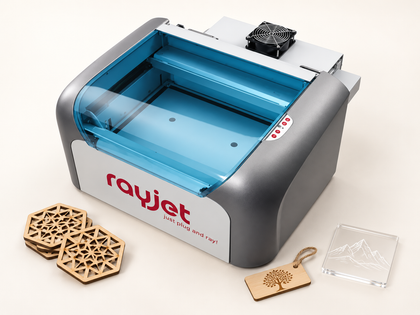 RayJet
The first laser for a classroom. Enclosed, simple, hard to get wrong.
1 product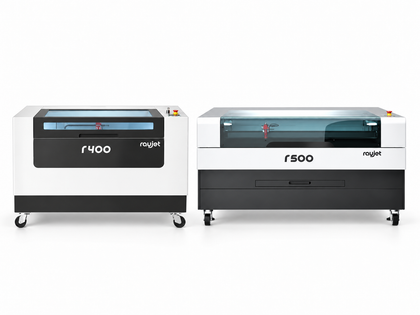 R Series
Straightforward cutters for a design studio or maker space.
2 products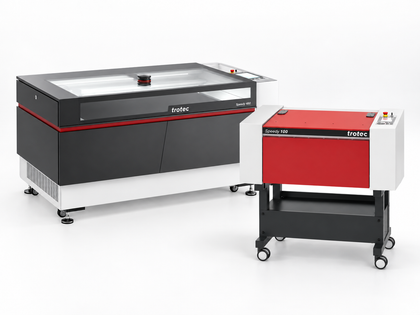 Speedy
The all-rounder once a department is running real projects.
5 products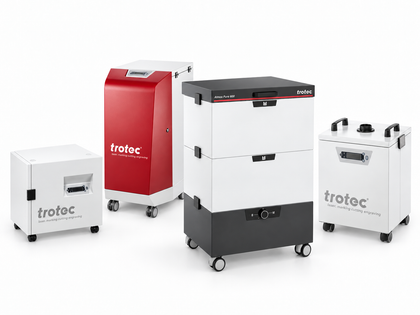 Exhaust Systems
Extraction. Not optional in an occupied teaching room.
1 productMaking the case.
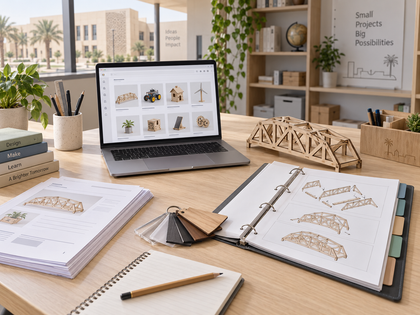 Teacher's hub
The practical side: first week, class management, materials, upkeep.
 Beyond shop class
The other departments that will queue for it, and how to share it.
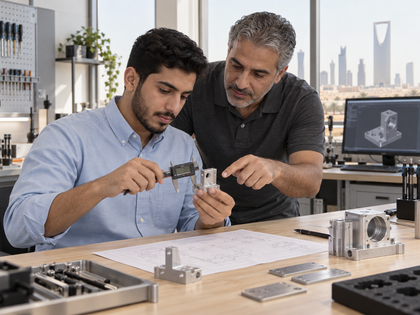 Career path
For the conversation with parents, deans and funding committees.
 Fundraising
If the case is made and the budget is the obstacle.